
How to Strengthen Your Ability to “Team”
Every organization has teams. That’s not the same as saying every organization has teamwork.
It’s a distinction that matters more than most people realize.
A team, in a structural sense, is just a group of people who report to the same leader. They show up to the same meetings. They’re listed on the same org chart. But that doesn’t mean they’re actually teaming.
I use the word “teaming” deliberately and as a verb. Because being on a team and actively teaming together are two very different things. One is a structural fact. The other is a choice, a set of behaviours, and an ongoing commitment.
This article is about what stronger teams actually look like in practice: the signs that a team isn’t functioning well, why that happens, and the three components that make the biggest difference in building real team cohesion.
Three Signs That a Team Isn’t Working Well
The most obvious sign is usually the results. Teams exist for one primary reason: to achieve a result. When those results aren’t there, or aren’t consistent, that’s often the first indicator that something’s off underneath.
But here’s an important nuance: some teams do get results even when they’re not cohesive. A highly directive leader who micromanages every detail can push a team to perform. Individual contributors who are self-motivated can carry things forward on their own. But that kind of performance isn’t sustainable. It burns people out. It creates dependency on one person. And it usually doesn’t survive the first real challenge or change.
So, results are the headline, but the subtler signs are often more telling.
1. Difficulty making (and sticking to) decisions
Teams that aren’t working well have trouble making decisions that everyone can align to and get behind.
You hear things like “I don’t have the tools I need,” or “I’m not clear on what’s expected of me.”
Or there’s a lack of follow-through. Even when decisions do get made and expectations are clear, not everyone is doing their part.
2. Conflict, drama, and friction
You probably won’t be surprised to hear that having a lot of interpersonal friction is a sign that the team isn’t working well together.
Leaders may be spending a huge proportion of their time managing conflict and drama between team members rather than focusing on strategy and the actual work. Studies suggest leaders on struggling teams can spend 40% or more of their time on this. That’s two full days in a five-day work week.
3. Lack of engagement in online meetings
In virtual and hybrid environments, the signs look a little different. Cameras off in meetings. People who are present but not jumping into conversations, not sharing in the chat, not offering opinions.
Compare that to a team that’s functioning well, where people are leaning in, curious about each other’s perspectives, actively contributing. The energy is visibly different.
Three Issues That are Usually Going On Underneath
When I dig into why a team isn’t functioning well and assuming a healthy workplace foundation is in place, it usually comes back to a few things.
1. People don’t understand each other
This is a bigger deal than most organizations realize. Everyone has a different communication style, work style, and personality. When people aren’t aware of those differences (or aren’t willing to adapt) friction builds.
Someone who moves fast and wants quick decisions gets frustrated with a colleague who needs time to process and wants all the details first. Someone who prefers to talk things through in person feels dismissed when their teammate would rather just send an email.
These aren’t personality flaws. They’re different preferences and tendencies. But without awareness of those differences, people take things personally. They make assumptions about each other’s intentions. And judgment takes root where understanding should be.
2. The team has never defined what teaming looks like
We all learn about being on a team in different ways: through sports, through family, through school projects, through previous workplaces. And we all show up with different ideas about what being a good team member means.
Some people learned that a good team member puts in extra hours. Others learned that it means staying out of each other’s way. Others learned it means doing everything together.
When a team has never sat down and defined how they want to work together, everyone operates from their own assumptions. And those assumptions don’t always align.
3. Someone is unreasonable
This one is harder to talk about, but it’s real. Sometimes a team has a member (or a leader) who simply won’t meet others halfway. It’s their way or the highway. They’re not thinking about what’s rational and fair for the collective team. They’re thinking from their own perspective, full stop.
In law, there’s something called the reasonable person standard: what would most people of sound, sensible, fair judgment think?
When someone on a team consistently falls outside that standard, it derails everything. And honestly, there’s very little that can be done to build cohesion if that person stays and nothing changes. I’ve worked with those teams. It’s one of the hardest situations in team development.
What a Stronger Team Actually Looks Like
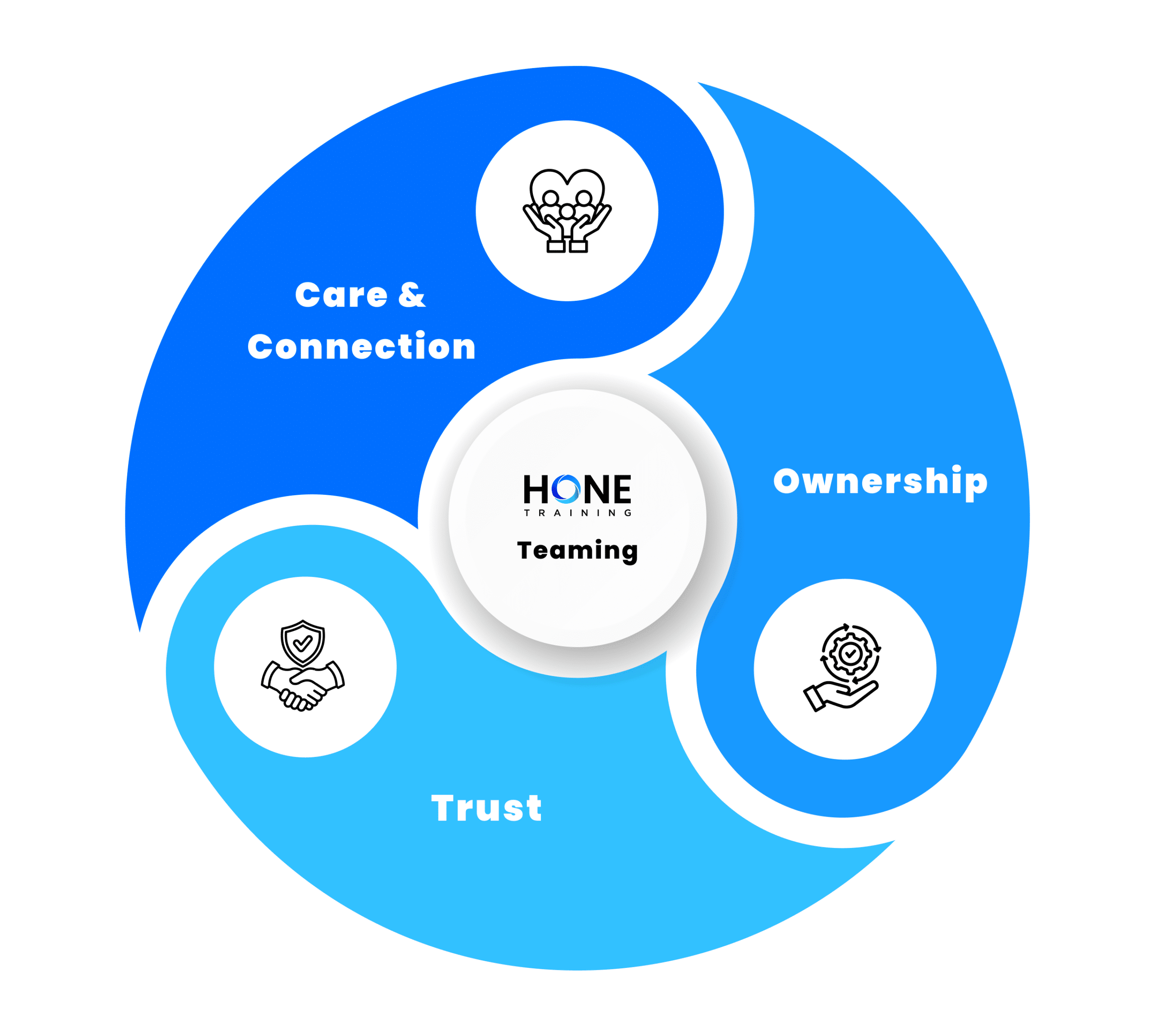
What does it look like when a team is genuinely teaming?
Care and Connection
People care about each other. They care about each other’s work. They care about everyone being successful, not just themselves.
There’s a level of genuine connection. People know each other beyond the task list. They know about each other’s lives, their likes and dislikes, how their weekend was. It doesn’t have to be deep personal disclosure. It’s just real human interest.
Ownership
People feel a personal responsibility and stake in the team’s success, a connection to the purpose and the why behind the work.
And there’s commitment to the results, to each other, and to the agreements they’ve made about how they’ll work together.
Trust
Trust is central to all of this. Not just trust in the general sense, but what Patrick Lencioni calls vulnerability-based trust: the belief that it’s safe to be real, to be open, to admit a mistake or ask for help. Without fear that someone will use it against you, judge you, or hold it over your head.
When that trust exists, people know their peers’ intentions are good. They’ve got each other’s backs.
Creating and sustaining stronger teams requires making teaming a priority
Just like any relationship – a partnership, a friendship, a family – a team requires ongoing attention.
It’s never finished business. And the moment you treat it as a checkbox: “we did team building, check, we’re done”, that’s when things start to slide.
Teaming needs to be on the to-do list so that there is consistent effort and follow-through.
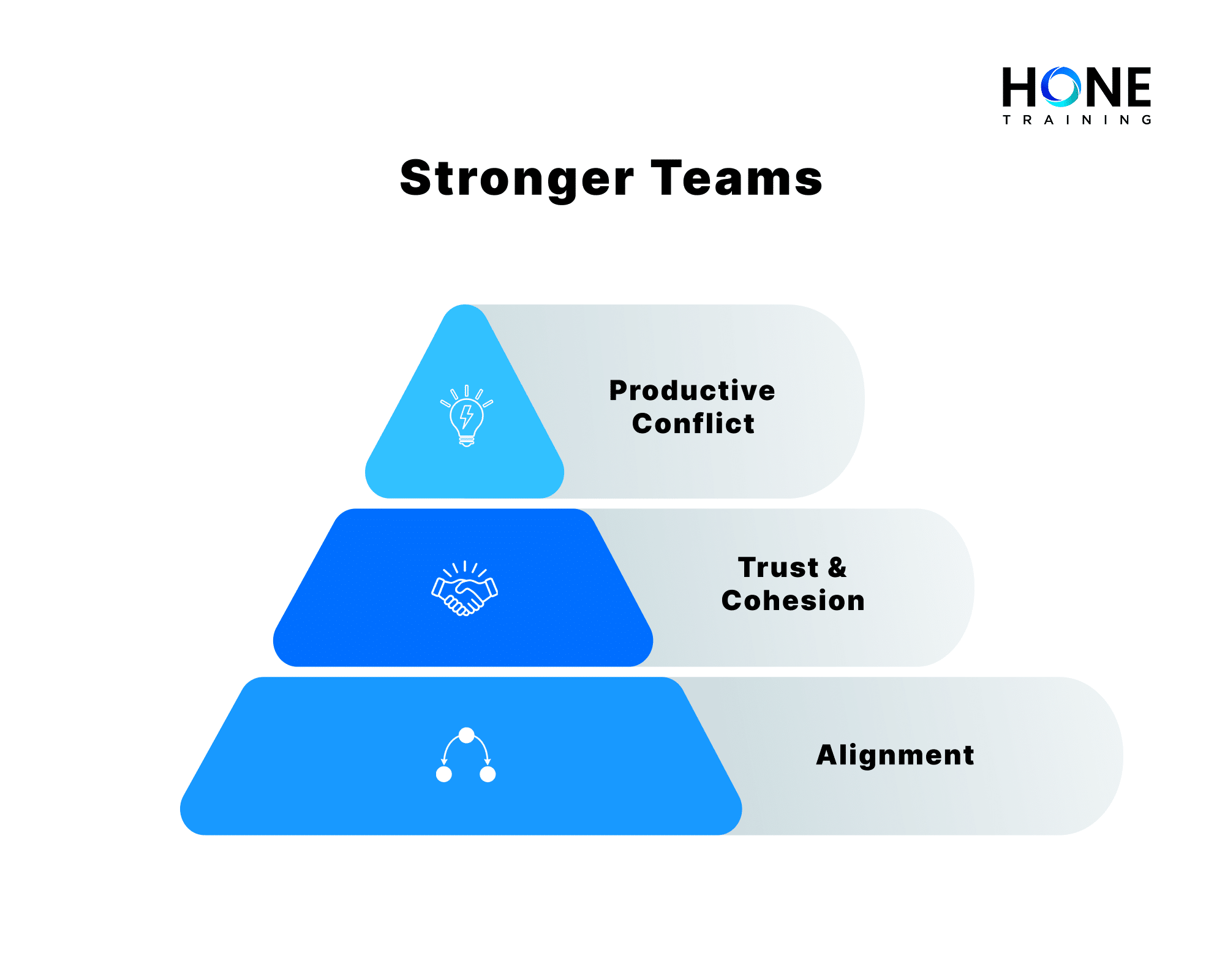
Three Components of Stronger Teams
When I work with teams, I focus on three interconnected areas: alignment, trust and cohesion, and productive conflict.
Each one matters on its own, but they build on each other in ways that make the order important.
Component 1: Alignment
This might surprise people, because alignment is often treated as something that comes after you’ve built trust and worked through conflict. But I’ve found that alignment is actually where the strongest teams start.
Not alignment in the lofty, vision-and-mission sense (though that matters too.) I’m talking about the practical, ground-level kind: how do we want to work together?
This means sitting down as a team and defining your norms.
- How quickly do we respond to emails? Who do we copy?
- What happens when something is urgent? Do we text, call, or wait for the next meeting?
- How do we run meetings?
- How do we make decisions?
- How do we give each other feedback?
- How do we recognize and appreciate each other’s work?
I can’t tell you how many teams I’ve worked with where just getting clear on communication norms like when to email versus call, how fast to respond, who needs to be in the loop has resolved a surprising amount of frustration.
The alignment work also includes priorities. I recently worked with a team at a large organization where every member said they didn’t feel like a real team because their work didn’t overlap. But when we did a priority-setting exercise and had each person independently identify what was most critical to their collective success, they all came back with the same answer. They were united on their top priority. They just hadn’t ever talked about it.
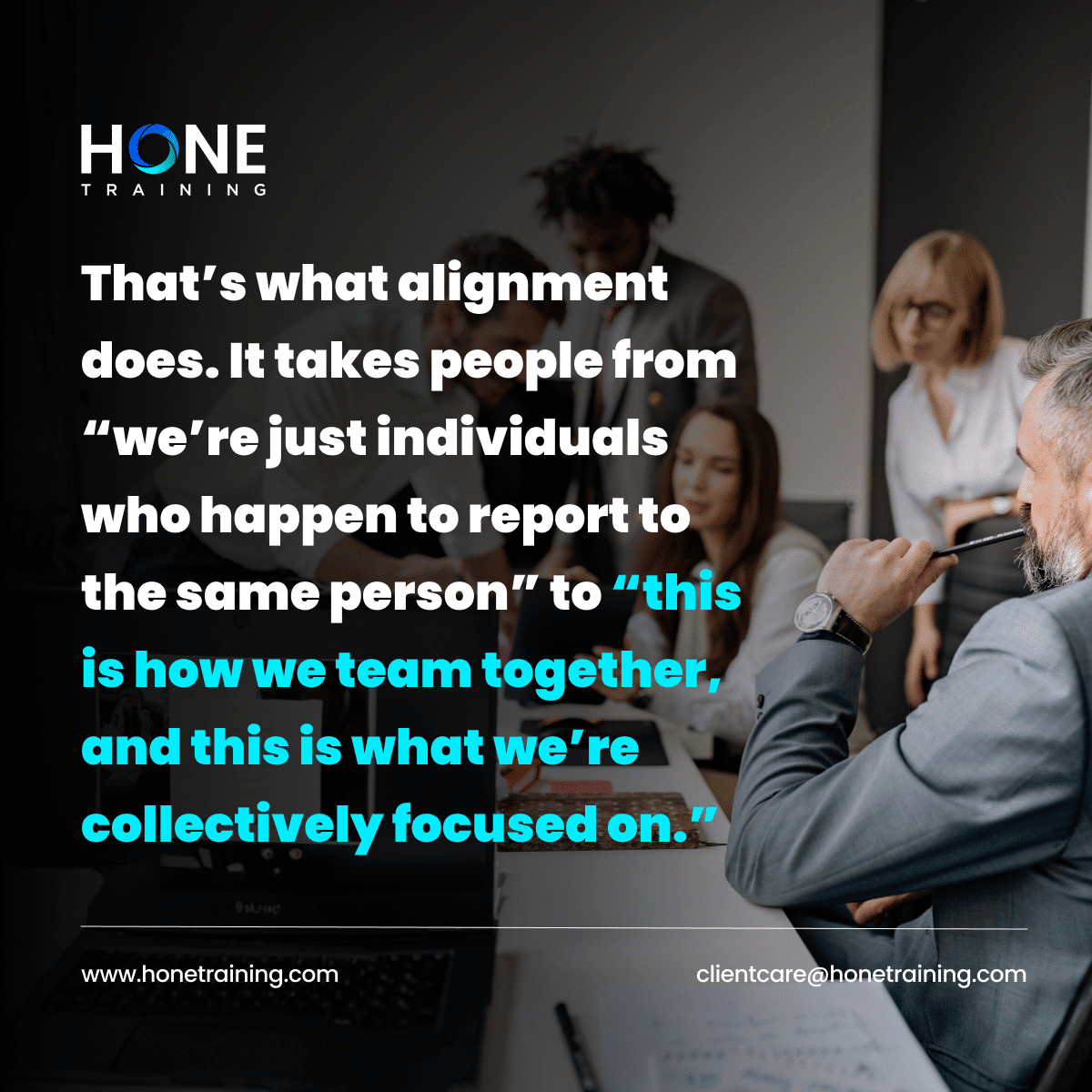
That’s what alignment does. It takes people from “we’re just individuals who happen to report to the same person” to “this is how we team together, and this is what we’re collectively focused on.”
Component 2: Trust and Cohesion
Once a team has some foundational agreements in place, trust becomes much easier to build. When you can count on people to show up the way they said they would—in meetings, in communication, in follow-through—that consistency lays the groundwork for deeper trust.
A big part of the trust work I do is helping people move from judgment to understanding. Most of us stand in judgment of our colleagues intentions until we actually take the time to understand them.
A tool like Everything DiSC helps with this because it creates a shared language for communication and work styles that depersonalizes the friction. Instead of “that person is difficult,” you start thinking “that person has a different set of preferences and needs.”
When people understand each other’s intentions, comfort zones, and what makes a good work day versus a bad one, they can actively stretch to meet each other’s needs. “I know you need time to think about this, so let’s take a break and come back to it.” Or “I know you’d rather talk this through in person, so let’s find time to sit down together.” A team that’s working well does that for each other naturally.
The deeper level of trust is about feeling safe to be real. To admit you don’t know something. To say you made a mistake. To ask for help without worrying it will be held against you. This doesn’t happen overnight. It’s built through repeated experiences of putting yourself out there and having it met with support rather than judgment.
Component 3: Productive Conflict
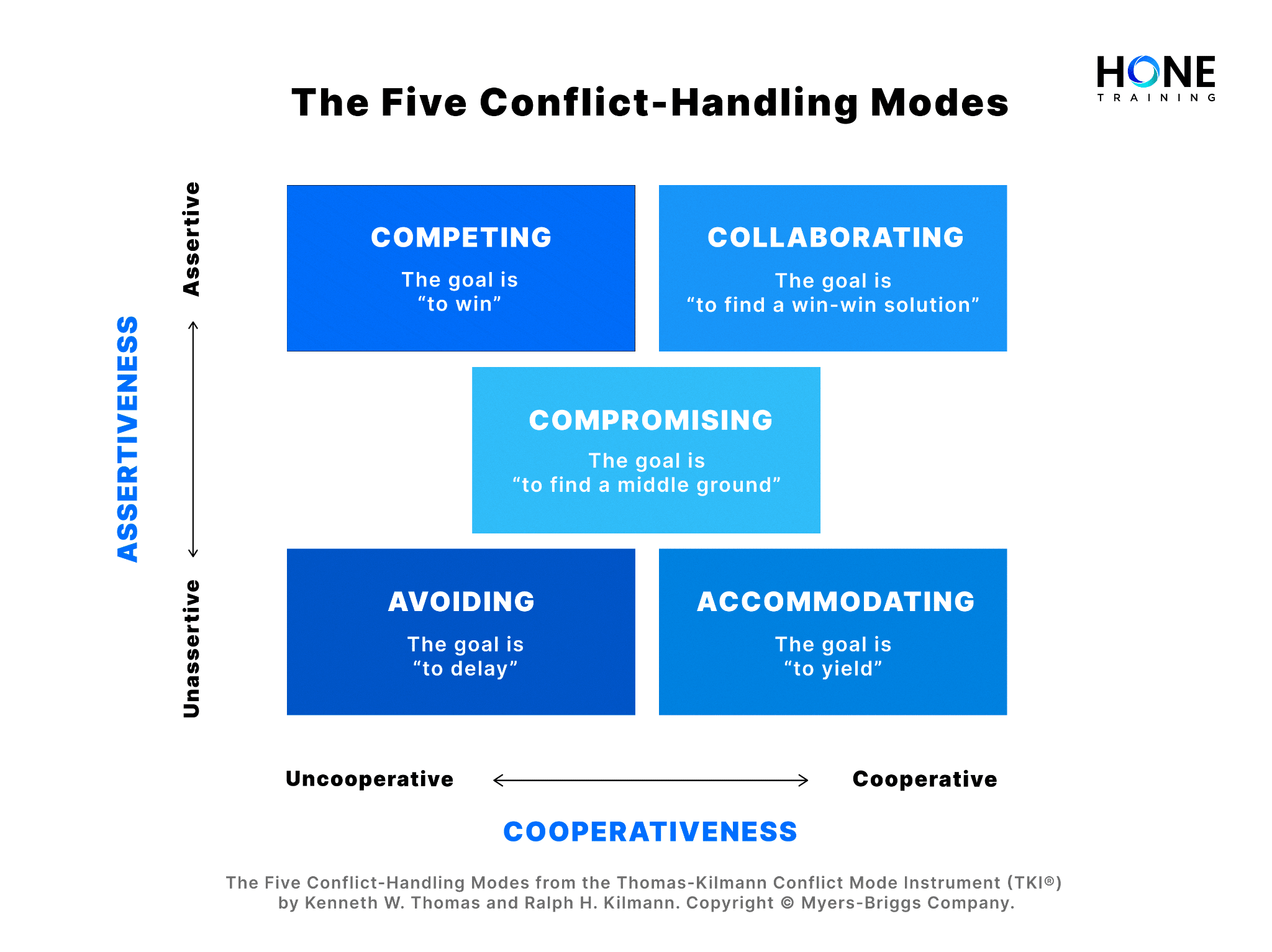
This is the hardest one for most teams, and it makes sense. Speaking up, disagreeing, and surfacing difficult issues is much harder without the respect, alignment, and trust that the first two components provide.
When I talk about productive conflict, I’m not talking about arguments or hostility. I’m talking about healthy debate. Are we sharing our real opinions in meetings? Are we challenging ideas that need to be challenged? Are we surfacing concerns early, before they become bigger problems?
There are a few dimensions to this. At the team level, it’s about creating an environment where everyone’s perspective is heard, where people are genuinely curious about differing viewpoints, and where the goal is the best possible decision (not just the fastest or most comfortable one.)
At the individual level, it’s about understanding how each person tends to handle conflict.
Some people default to competing: assertive, focused on winning their position. Others default to avoiding: steering clear of the conversation altogether. Some accommodate, giving in to keep the peace. Some compromise. And some collaborate, working through the tension to find a solution everyone can support.
All of those approaches have a time and place, but problems arise when people are stuck in one mode regardless of the situation.
It’s also about recognizing that every one of us has productive and destructive behaviours that show up under stress.
When we’re triggered, we can default to comfort zone responses that don’t serve the team well. Building awareness of those patterns (and having the trust to name them) is part of what makes conflict productive rather than corrosive.
What This Looks Like in Practice – A Real Example

A few years ago, I started working with a leadership team in a large provincial government division.
When we first connected, they were a team in name only. Structurally, they all reported to the same assistant deputy minister. But they were working in silos. They weren’t having open, honest conversations. There was a lack of clarity around commitments and expectations. Trust was an opportunity area. Even something as simple as people acknowledging each other when they came into the office wasn’t consistent.
They started with the Five Behaviors assessment, and their scores were low across the board. In the first session one of the biggest breakthroughs was the concept of “first team.” Most of the leaders saw their direct reports as their primary team. But the idea that their leadership team itself should be their first team was new. It meant thinking about the greater good: if one of us isn’t succeeding, none of us are succeeding.
That idea was a turning point, but it was just the beginning.
Over the next several years, they invested in layer after layer of team development. They did deep work on personality and communication styles so they could move from judgment to understanding. Their leader, for example, had a very direct, blunt communication style. His intention was clarity and efficiency, but the impact wasn’t always received that way. Understanding that gap between intention and impact changed how the whole team communicated.
They developed a team charter with norms and agreements they all signed off on. They did priority-setting work to make sure they were all focused on the same things. They reassessed periodically, and each time their scores improved.
Eventually, they reached the point where multiple behaviours were scoring at the high-cohesion level. But more importantly, the feel of the team had changed. They had moved from a reactive posture of “we have a problem, we need to fix it” to a proactive one: “we’re already strong, how do we keep getting better?”
The real proof came when they had to make major structural decisions about the future of their division. They were able to leverage everything they’d built – the trust, the ability to have productive conflict, the shared commitment – to work through those decisions together as a genuine team.
This happened because they put teaming on the priority list and kept it there. They treated it as ongoing work, not a one-time event. And everything started with a group of individuals who recognized they were on a team but weren’t teaming, then made a choice to change that.
Why this matters: Teams are going to become even more important in the coming years.
People who went through the pandemic early in their careers may not have had the chance to learn how to work together in person. Remote and hybrid work environments mean people are seeing each other less. And organizations that are bringing people back to the office are finding that physical proximity doesn’t automatically create collaboration.
The need for intentional team development (learning how to team together) is only going to grow. And the organizations that invest in this proactively, rather than waiting until things are broken, will be the ones that get the best results and keep their best people.
Where to Start
The most common question I get: “Where do we start?”
It depends on where the team is. Some teams need to start with the alignment basics. Defining how they want to work together before anything else can build on it. Others are ready for deeper trust work or need to strengthen their ability to have productive conflict. Many need all three, developed over time.
What I always recommend first is an honest look at where the team actually is. Not where leadership hopes things are, but what’s really happening in meetings, in conversations, in the gap between what people say and what they actually do.
That’s what our Better Leaders, Stronger Teams, Healthier Workplaces assessment is built to help you figure out. It covers each of these areas and gives you a clear picture of where your team is strong and where focused development would make the most difference. You can take it here.
Or, if you’d prefer, feel free to book a confidential call to discuss your situation.
Randy Kennett is the founder of Hone Training, where he works with organizations across Canada to develop better leaders, stronger teams, and healthier workplaces through practical, evidence-based training and facilitation. For more than 17 years, he has partnered with government agencies, universities, nonprofits, and private-sector companies to create lasting organizational change.
Related Posts:
Better Leaders, Stronger Teams, Healthier Workplaces
Five Ways to Build Trust Within Your Team
The Thomas-Kilmann Conflict Model
Ready to strengthen these skills across your team? Take our Team Player Fundamentals online course.